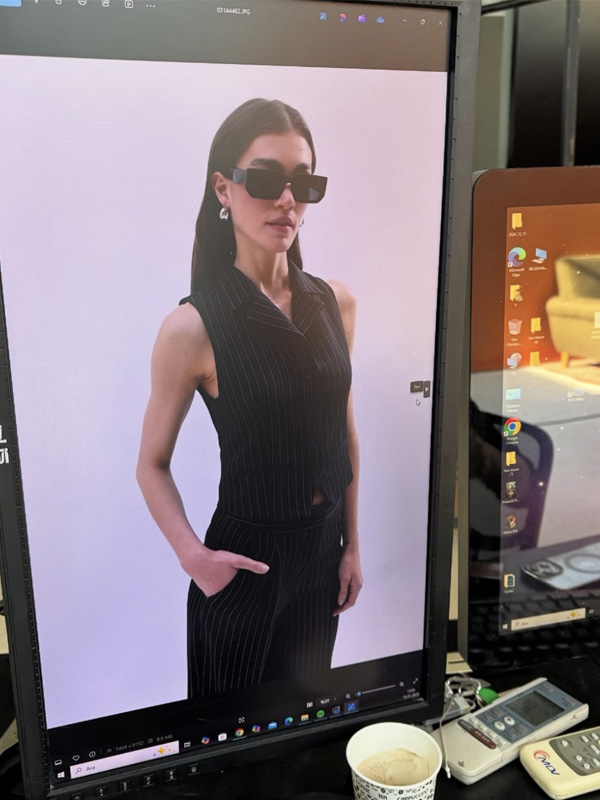
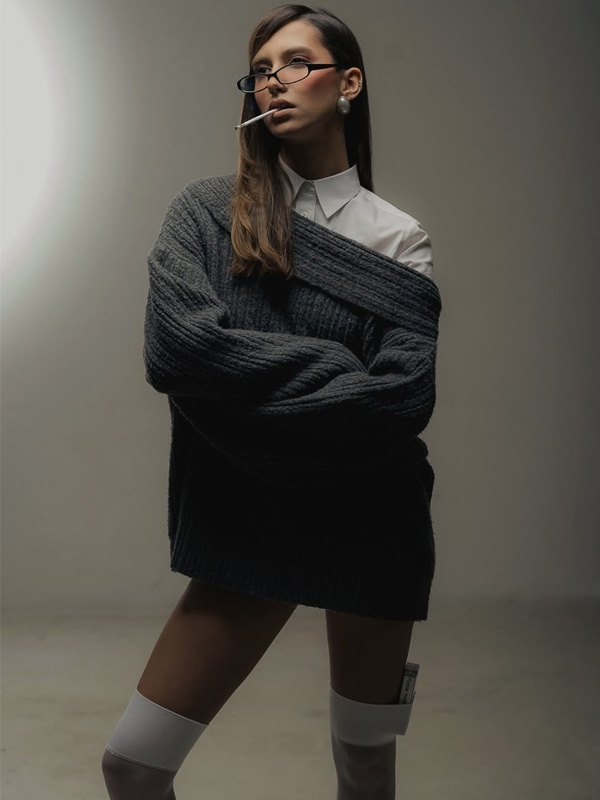
The things no one admits openly—like toxic dynamics, mistakes hidden behind NDAs, or lessons never taught in school but learned through painful trial and error. This section exposes what’s usually kept quiet or brushed under the rug.
Rakel Sanchez
(Fashion Designer & Stylist)
Have you ever felt your work was stolen or ignored?
Ignored, definitely—especially by professionals and showrooms. When we proposed Distortion, a deeply researched, collaborative editorial, many ignored us simply because it wasn't confirmed by a big magazine. I contacted 15–20 showrooms and got no replies, which made me feel like my work meant nothing.
"
I contacted 15–20 showrooms and got no replies, which made me feel like my work meant nothing.
Belu Bergagna
(Fashion model)
How many so-called ‘industry norms’ turned out to be completely absurd?
When I started working, my first trip was to Milan. At the time, they told me I couldn’t gain weight or increase my hip measurements. I just accepted it as normal… but over time, I realized how crazy that actually is.
Sebastián Bedoya
(Photographer)
Q: What’s something no one talks about when it comes to power dynamics on set or creative teams?
As long as there’s a clear lead in the art direction team, it flows. The director runs the show with their assistants.
Communication-wise, we usually present their concept or collection, and we interpret it. During the shoot, we share previews so they can approve on the spot—otherwise, we waste time.
Camila Barvo
(Textile Designer, Master’s Degree in Textile Art)
Q: What “normalized” behavior do you think is completely toxic?
Fashion is unfortunately full of egos.
And I’m not just talking about one place—I’ve seen it in many experiences worldwide. Everything is a competition. It’s never “let’s collaborate,” it’s more like “who can get to the designer first.”
In my role, for example, I’d get orders of what needed to be done, but never the full creative input. I didn’t have the designer’s complete vision to then translate that into a material or embroidery. That’s exhausting.
Communication-wise, we usually present their concept or collection, and we interpret it. During the shoot, we share previews so they can approve on the spot—otherwise, we waste time.
Martxel Montero
(Fashion stylist)
Q: What’s the biggest myth about this job that you’d like to debunk?
Ego.
"
Ego.
Camila Villegas
(Owner and Founder of the clothing brand Drimia)
Q: Have you ever felt like your work was stolen or ignored?
Yes. One of the most frustrating experiences I’ve had was when we pitched Drimia to a well-known department store. We had spent months preparing everything with so much care—from the presentation to every product detail, design, and concept. In the end, not only did they reject the proposal, but they did it in a condescending way, saying the brand looked “cheap,” completely ignoring the effort, the design, and the quality behind it.
It was really painful to feel like the work behind every piece wasn’t recognized, or the impact our brand has on the many families who rely on it. That moment reminded me that not everyone is going to value your vision—but also that you have to be your own biggest advocate.
Gustavo Quiceno
(Art Director)
Q: What’s that one thing everyone in the industry does but no one admits?
There’s always a point in the shoot where you mentally check out—you stop seeing things, lose focus for a while, and just kind of drift. Then you snap back into it.